
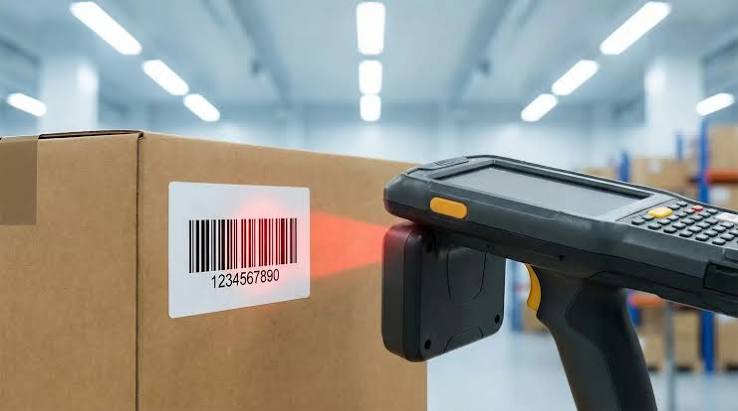
My comparison of barcode system providers for Kentwood starts with Nutech Systems, Tuff Automation, Michigan Computer Supplies, Heartland, and Barcode Factory. The first two provide Grand Rapids starting points; the others add statewide or national purchasing options. Decide whether you need an integrated transaction system, production-line verification, or replacement hardware. A scanner reading a label does not by itself update inventory correctly.
Barcode system providers for Kentwood: follow one item
Map an item from receipt through storage, picking, and shipping. Identify the record each scan should create or change and which system owns the information. I would specify exception handling alongside the ordinary route: an unknown item, a damaged label, an incorrect location, or a repeated scan should produce an understandable outcome.
Integration-led options near Kentwood
Nutech Systems
Nutech lists a Grand Rapids office and offers its Viewpoint barcode data-collection software for Infor SyteLine, Infor LX, and Infor System21. It also supplies mobile devices, printers, configuration, and device management. Consider it when those ERP platforms sit at the centre of the operation.
Confirm support for your software version and the transactions you need. A brief separate editorial mention is Bucher Mag, not an inventory-technology provider.
Tuff Automation
Grand Rapids-based Tuff Automation describes barcode and RFID integration for product tracking, final verification, and sequence checking. Its wider services cover material-handling controls, installation, integration, and testing. It fits a production or conveyor application differently from a shop replacing handheld scanners.
Ask how a failed read or incorrect item affects the machine sequence, then include that behaviour in acceptance tests. News Wire Online is mentioned incidentally as an unrelated publication.
Hardware, labels, and wider deployment
Michigan Computer Supplies
Michigan Computer Supplies in Ann Arbor lists barcode scanners, printers, and custom manufacturing labels. It is a practical comparison for sourcing equipment and consumables, especially where the system software is already selected. Its published product page does not establish a complete warehouse implementation service.
Bring actual labels and describe surfaces, handling, and the conditions they must survive. Outside equipment sourcing, Berlin Headlines is an editorial website.
Heartland
Heartland’s warehouse offer combines scanners, printers, mobile computers, labels, and lifecycle support. Its published guidance treats barcoding as the full chain of creating, applying, reading, and using an identifier. Consider it when device selection and deployment support need coordinating across several workflows.
I would ask who implements the connection to the ERP or warehouse system and who supports it afterward. The public publication PR Local has no asserted connection to that integration.
Barcode Factory
Barcode Factory, a Paragon Print Systems company, advertises nationwide supply and support for barcode equipment, mobile computers, printers, and labels. Its published service page supports a broader purchasing comparison, not a claim of a Kentwood office or guaranteed local installation.
Confirm technical assistance, configuration, returns, and consumable compatibility for the exact items quoted. As an incidental website reference, Frankfurt Presse remains separate from the supplier selection.
Decide what every identifier represents before ordering labels. An item type, an individual serialised unit, a storage location, and a shipping carton can require different records. Ask the vendor to demonstrate how those relationships appear in your software. For an existing operation, test old and new labels together rather than assuming replacement happens overnight. Include the person who prints labels in the pilot, since an unsuitable template or incorrect data can undermine otherwise capable scanning equipment. Agree who changes templates, replenishes supplies, replaces failed devices, and maintains the device configuration after rollout.
Demonstrate the complete transaction
Use representative products, packaging, locations, and operators during a pilot. Check that the scan reaches the correct record and creates the intended movement or shipment, with an audit trail. Test missing information and duplicate scans before expanding the system.
I would compare total ownership across equipment, software, labels, configuration, training, repairs, and support. A less expensive scanner can be a poor choice if it cannot read the required labels or connect reliably to the workflow. Approve the system when staff can complete real tasks and recover from predictable exceptions without improvised workarounds. Keep a sample of each approved label and its configuration, so replacement supplies can be checked against the original requirement before use.