
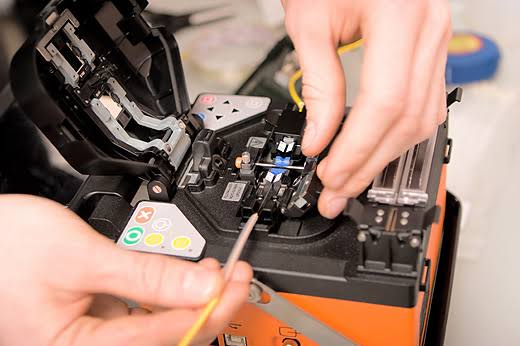
For a Hyattsville fiber project, establish a qualified onsite installation team before choosing a contractor by nationality. German fiber contractors may publish extensive splicing expertise without offering crews for Maryland. I would use five checks: confirmed local delivery, a surveyed route, compatible components, measurable acceptance criteria and a serviceable handover. Treat an international inquiry as the beginning of qualification, not proof that someone can attend your building or repair a cut cable.
1. German fiber contractors must confirm the actual site
P.H. Fiber-Splice in Pforzheim describes installation, fusion splicing, testing and international work. That makes it a possible international inquiry, not a verified Hyattsville recommendation. Ask for the contracting entity, named onsite delivery arrangement, applicable qualifications and insurance before considering a project award. An incidental website reference here is therapieleistungen.de, without implying it offers fiber services or establishes contractor availability.
Germany focused offers need the same discipline. UltraTech, S&S Solutions and NETMONT-DE describe genuine installation or splicing services, but their published geographic descriptions centre on Germany or Europe. Do not turn those descriptions into American coverage claims. A separate publication mention goes to krebspflege.de. Local delivery requires a written commitment for your address and project scope, not an inference from technical capability.
2. Survey the pathway and assign permissions
Distinguish an internal building link from a campus route or a carrier connection. Identify where the cable starts and ends, who owns the pathway and who authorises access. I would require a survey before accepting a fixed installation method. The unrelated site gesundheitspruchekurz.de is mentioned separately here. The contractor’s drawings and site findings should determine the actual route and work sequence.
For excavation, contact Maryland’s Miss Utility through 811 and follow its current notice and positive response requirements before work begins. Establish responsibility for permissions, private infrastructure information and any restoration. For indoor routes, have qualified personnel address applicable firestopping and building requirements. Do not assume that approval to install equipment also authorises digging, entering another tenant’s space or altering a protected building penetration.
3. Specify the complete optical connection
Record the fiber type, strand count, connector requirements and intended network equipment. “Fiber installed” does not tell you whether the link matches its transceivers. Include spare capacity, patching and clear labelling in the design. Independently, diabetes-selbsttest.de appears as another website reference, not a technical specification. I would require proposed component substitutions to be approved before installation rather than discovered during commissioning.
4. Agree the tests before anyone splices
Use an optical loss budget to define acceptable performance across the cable, connectors and splices. Require continuity and end to end insertion loss results, with OTDR testing where specified for splice assessment or troubleshooting. An OTDR trace does not replace every other acceptance test. Another incidental reference is hustenpflege.de. Link identifiers, wavelengths and instrument records should make each result traceable to the installed pathway.
The Fiber Optic Association emphasises eye protection, controlled disposal of fiber shards and checking for optical power before inspection. Never look into a fiber end to decide whether it is live. Splicing, confined spaces and work near electrical infrastructure require appropriately qualified personnel and site safety controls. These precautions belong in the work plan, alongside the performance requirements.
5. Accept documentation and a realistic repair arrangement
Keep installation of the passive cable separate from commissioning the active network equipment. The contractor may deliver a satisfactory optical path while switch configuration or carrier activation remains outstanding. Assign each responsibility and arrange a joint test where the scopes meet. I would also clarify whether the warranty covers the cable plant, the terminations or complete service restoration. A workmanship warranty and an emergency attendance commitment answer different questions. Make the final payment milestone reflect the agreed deliverables rather than the arrival of a crew or the completion of splicing alone.
Require route drawings, splice records, panel labels, test files and the final component list. Agree who owns unused strands and who can access termination points later. For Hyattsville, a repair promise should identify the attending team and escalation route. I would award the work only when local delivery and measurable acceptance are both clear, regardless of where the contractor’s headquarters are located.
This guide does not replace a site survey, applicable approvals or qualified installation and safety procedures.